A sketch is a direction, not a specification
A strong sketch makes a garment feel possible. It can communicate proportion, attitude and a distinctive detail in a few lines. Yet many decisions remain outside the drawing: construction, measurements, fabric behaviour, closures and the way the garment should move. Technical development gives those decisions a practical form.
For an independent designer or emerging brand, the goal is not to remove creative expression. It is to establish enough clarity that the idea can be sampled, reviewed and, where appropriate, prepared for controlled production. Each stage should answer a defined question rather than simply produce another document.
Begin with a useful brief
A development brief should describe the intended wearer, garment purpose and visual direction. It should also explain what already exists. A concept board, rough sketch, technical drawing, existing pattern and physical sample represent different starting points. Naming the current stage helps a studio propose the right scope.
Include the intended quantity, size requirements, material preferences and preferred timeline. Separate essential requirements from areas open to discussion. If a launch date is fixed, say so early; it still needs to be assessed against development, approvals and material availability. An initial inquiry is not a production commitment.
Translate appearance into construction
The next step is to describe how the garment could be assembled. Seams, facings, linings, pockets and fastening methods affect both its appearance and the work involved. A detail that looks simple in a sketch can require substantial development once fabric thickness or access for sewing is considered.
Technical specifications connect these construction decisions with measurements and relevant details. They should be specific enough for the agreed stage, without pretending that unresolved questions are final. Where decisions change, the current version must remain easy to identify. Conflicting sketches and specification sheets can create avoidable rework.
Patterns connect dimensions and shape
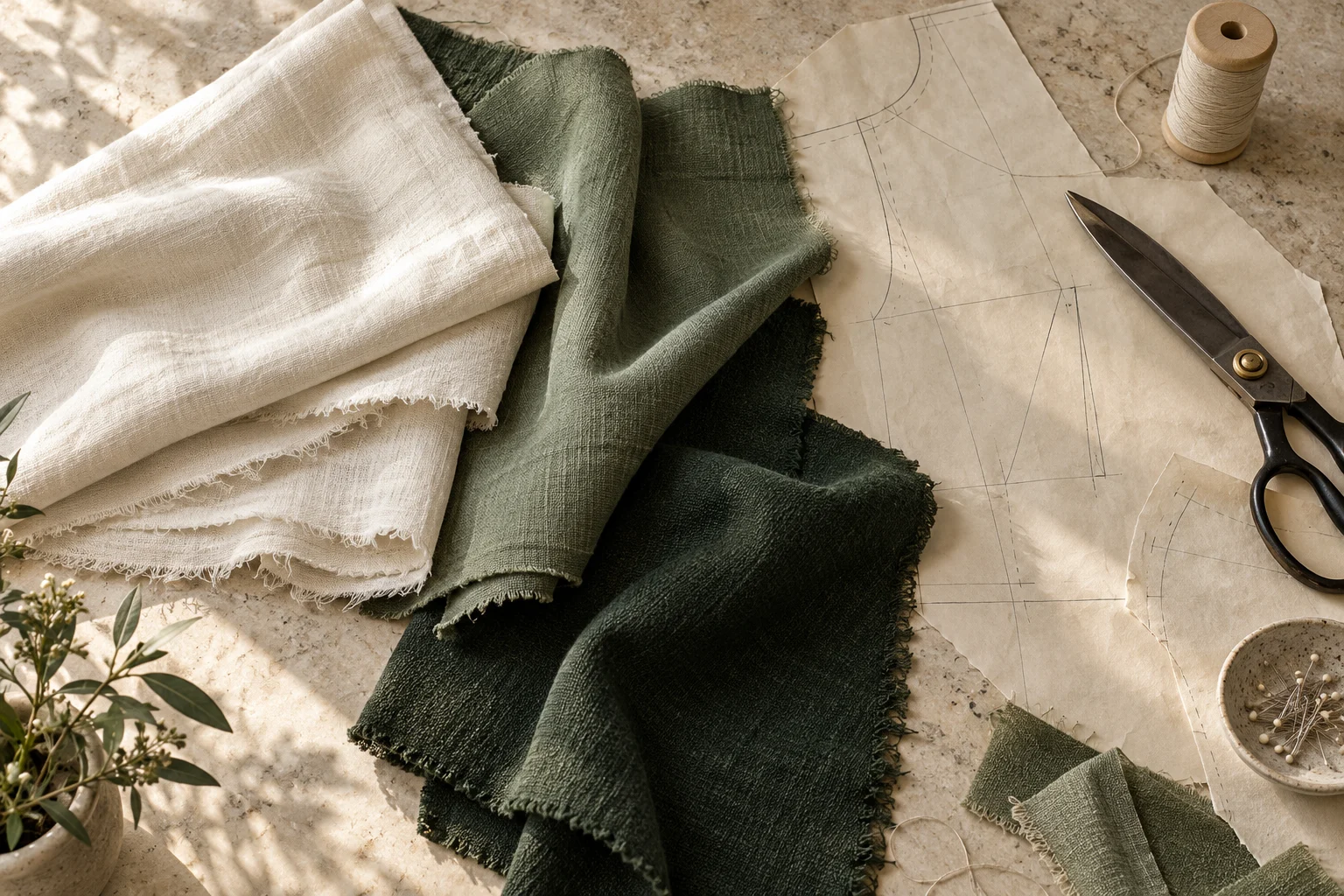
A pattern translates the intended silhouette into pieces that can be cut and assembled. Its development depends on fit expectations, body measurements or a defined size base, material characteristics and construction method. Digital preparation can support controlled revisions, but the format alone does not establish a correct fit.
Grading is a separate consideration. A pattern for one reviewed size is not automatically a complete size range. Before work begins, agree which sizes, digital formats and documents are required. Clarify whether source files, revision rounds and future adjustments are included in the development scope.
Material choice is a technical decision
Fabric influences drape, ease, structure and seam behaviour. A garment developed for one cloth may behave differently when the material changes. This is particularly relevant when a prototype uses a substitute material or when surplus textiles vary in weight or dimensions. Those differences should be visible in the development plan.
Trims and internal components matter too. Interfacing, lining, fastenings and decorative elements must work with the main fabric. Supply availability needs to support the intended quantity. It is difficult to approve a reliable production plan if essential components remain unspecified or cannot be obtained in sufficient amounts.
Give every sample a purpose
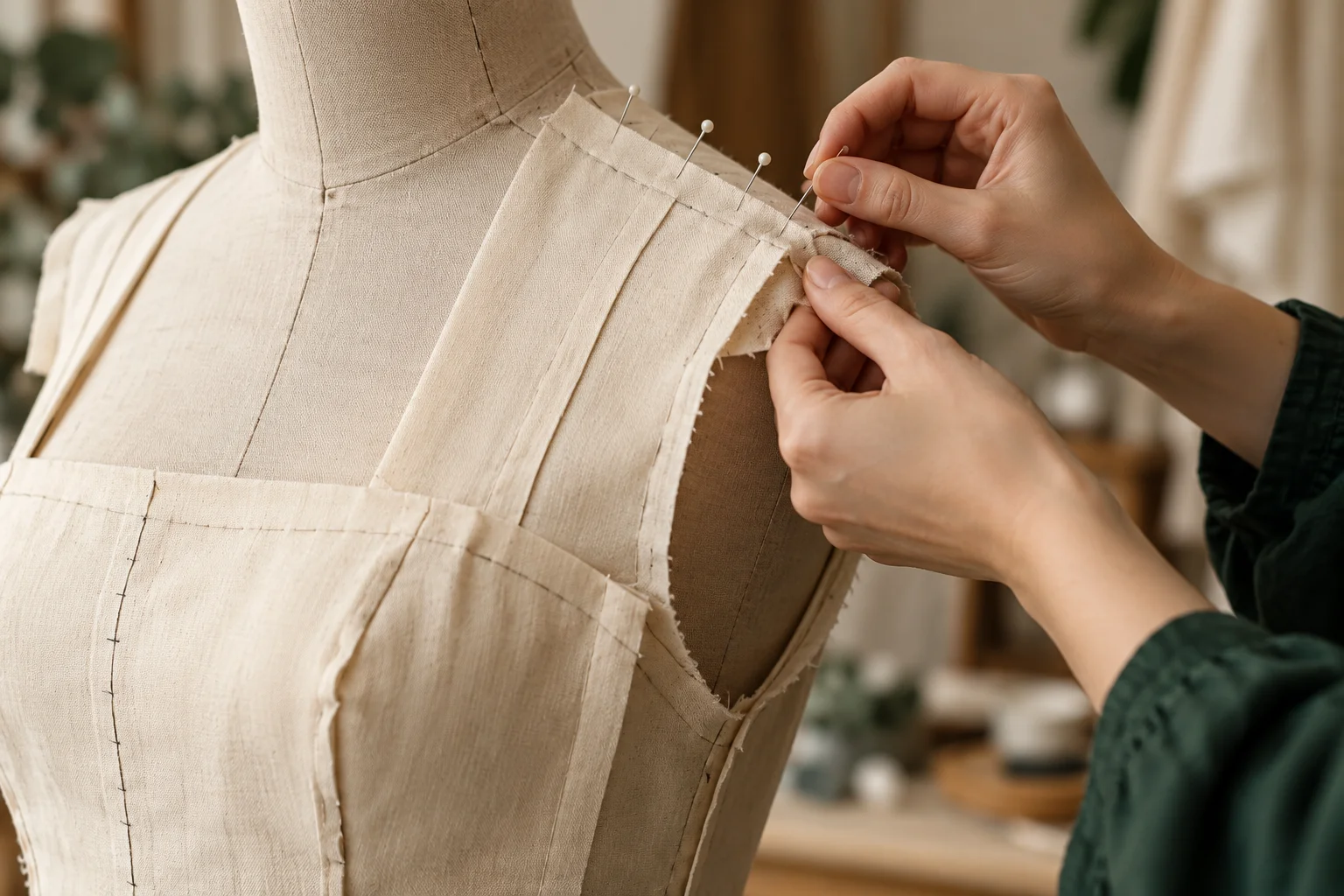
A prototype might explore shape, construction or proportion. A later sample may need to use the intended materials and demonstrate the finishing expected for approval. The relevant question is what the sample is meant to prove. Its limitations should be clear to everyone reviewing it.
Fit review can consider balance, comfort, movement, placement and measurements. Feedback is most useful when it describes a specific observation: a restricted movement, an unwanted fold or a pocket position. General reactions are a starting point, but they need to become actionable decisions for pattern or construction changes.
Record revisions and approval
After review, changes should be coordinated across the pattern, sample notes and specifications. A revised sleeve is not fully resolved if the production document still describes the previous version. The number of review rounds depends on the project, and additional work should be discussed rather than assumed.
Approval needs a clear reference. Identify the sample and document versions being accepted, note any remaining exceptions and agree what happens next. Approval of the visual concept does not necessarily mean approval of fit, final fabric or production finishing. Keeping those decisions distinct prevents misunderstandings.
Prepare for the next stage
Production preparation brings together the approved garment, available materials, quantity, relevant size information and quality expectations. The studio can then assess construction requirements, capacity and an achievable schedule. Costing also depends on the settled scope, not simply on the number of pieces.
Professional development gives a brand a better basis for decisions. It cannot guarantee that an idea will be commercially successful, but it can make technical questions clearer before wider production. For POARE’s planned approach, see the development journey, explore sampling and fit development, or prepare your starting information through the project brief tool.